
There was a time when my evenings looked just as busy as my mornings.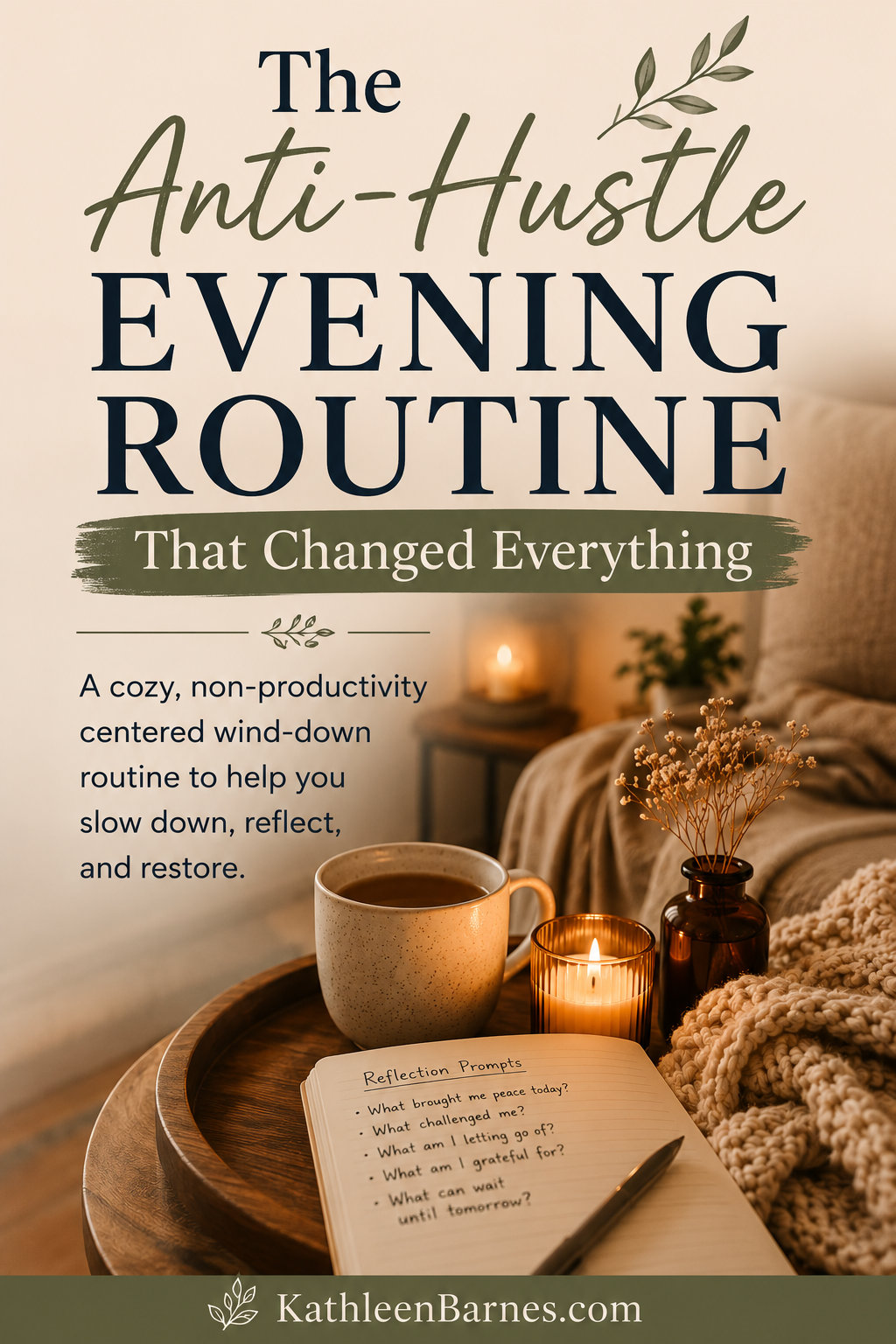
I’d finish work, make dinner, answer a few more emails, scroll through social media, catch up on the news, watch a show while half paying attention, and convince myself that I was “relaxing.” Then I’d crawl into bed wondering why I still felt exhausted.
The problem wasn’t that I wasn’t getting enough sleep. The problem was that I never actually stopped.
Somewhere along the way, hustle culture convinced us that every hour should be productive. If we weren’t working, we should be learning. If we weren’t learning, we should be exercising. If we weren’t exercising, we should be optimizing tomorrow.
Even our evenings became another opportunity to improve ourselves.
Eventually, I realized something had to change.
Instead of trying to squeeze more productivity into the last few hours of the day, I started treating my evenings as a transition. A time to gently move from doing into simply being.
It wasn’t dramatic. I didn’t buy expensive gadgets or create a perfectly curated nighttime ritual. I simply gave myself permission to slow down.
That small shift changed everything.
Why Your Brain Needs More Than Sleep
Many people assume rest begins the moment their head hits the pillow.
In reality, your brain needs time to slow down before sleep ever begins.
When you spend your evening jumping from work to social media to television to answering texts, your mind never gets the chance to settle. Even if those activities feel relaxing, they often keep your brain processing new information right up until bedtime.
That’s one reason so many people wake up feeling tired despite getting a full night’s sleep.
Creating a slower evening routine gives your nervous system a chance to shift out of “go mode.” Think of it like allowing your car to idle before shutting off the engine instead of slamming on the brakes at full speed.
The goal isn’t perfection. It’s creating space.
Start With a Simple Transition Ritual
One of the easiest ways to signal that your workday is over is by creating a consistent transition.
This doesn’t need to be elaborate.
It could be changing into comfortable clothes, making a cup of herbal tea, lighting a favorite candle, turning on soft music, or dimming the lights throughout your home.
These small sensory cues tell your brain that something is changing. Over time, your mind begins to associate these simple actions with safety, calm, and rest.
The beauty is that the ritual itself matters less than the consistency.
Your evening begins when you decide the workday is over.
Let Your Senses Do Some of the Work
We spend most of our days living inside our heads.
Even while eating dinner or walking the dog, our minds are often replaying conversations, planning tomorrow’s schedule, or worrying about things we can’t control.
One of the fastest ways to interrupt that cycle is to gently reconnect with your senses.
Notice the warmth of your tea.
Feel the softness of your favorite blanket.
Listen to the sound of rain outside or quiet instrumental music.
Take a few slow stretches without worrying about whether you’re getting a workout.
Open a window and let the evening air drift into the room.
These moments may seem insignificant, but they invite your attention back to the present.
Sometimes the most calming thing you can do isn’t think differently. It’s simply notice what’s already around you.
Replace Screen Time With Quiet Time
This may be the hardest part of any evening routine.
Our phones promise relaxation, but they often deliver the exact opposite.
Five minutes turns into forty-five. One funny video becomes endless scrolling. Before long, you’ve absorbed dozens of headlines, opinions, advertisements, and updates that your brain now has to sort through.
Instead of filling every quiet moment with more input, try leaving a little space.
That space might look different for everyone.
You might spend ten minutes reading a novel instead of scrolling.
You could sit quietly with a cup of tea.
You might pray, meditate, or simply focus on your breathing for a few minutes.
Some evenings you may want complete silence. Other nights, soft music might feel comforting.
There isn’t a perfect formula.
The goal is simply to replace constant stimulation with gentle stillness.
Reflect Instead of Replaying
Have you ever climbed into bed only to have your brain suddenly remember every awkward conversation you’ve ever had?
You’re not alone.
When we don’t intentionally process the day, our minds often keep processing it for us.
A few minutes of reflection can help bring a sense of closure before bedtime.
You don’t need a beautiful journal or a complicated writing practice.
Simply ask yourself a few questions.
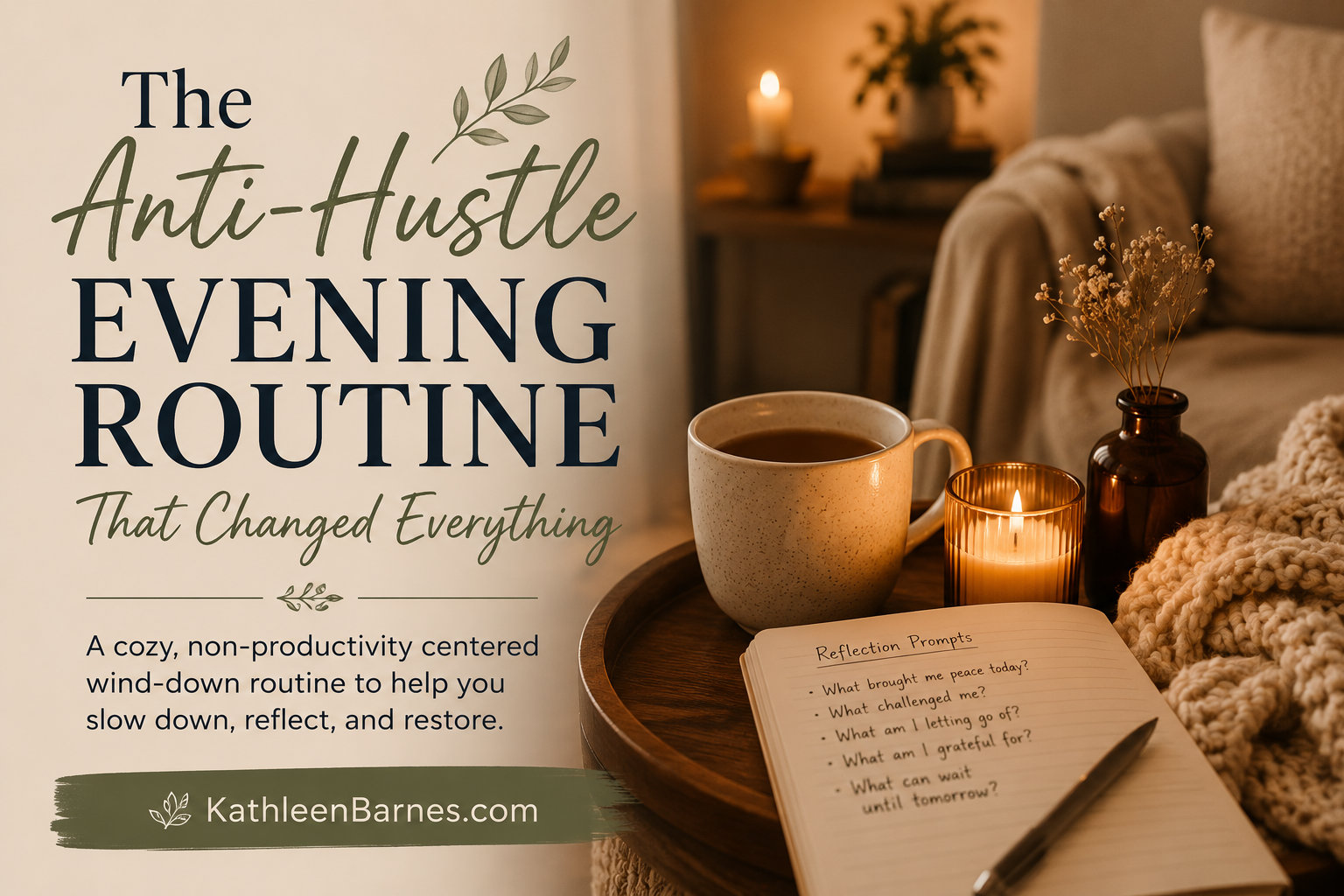
What brought me peace today?
What challenged me?
What am I grateful for?
What can I leave behind until tomorrow?
Sometimes you’ll write a page.
Sometimes you’ll write one sentence.
Sometimes you’ll simply think about the answers while sitting quietly.
Reflection isn’t about solving every problem.
It’s about giving your mind permission to set the day down.
Prepare for Tomorrow With Kindness
Many evening routines focus on becoming more productive tomorrow.
This one is different.
Instead of trying to get ahead, simply make tomorrow a little easier.
Fill your water bottle.
Lay out tomorrow’s clothes.
Tidy one small surface.
Write down the three things that matter most for the next day.
That’s enough.
These tiny acts remove friction from tomorrow morning without turning your evening into another work session.
There’s a big difference between preparing for tomorrow and working late into tonight.
Your Evening Doesn’t Have to Be Perfect
One of the biggest mistakes people make when building new habits is trying to create the perfect routine.
Life doesn’t work that way.
Some evenings you’ll have plenty of time.
Other nights you’ll be caring for children, working late, traveling, or simply feeling exhausted.
Your routine should flex with your life.
Maybe your full routine lasts an hour on weekends.
Maybe during the week it’s just ten peaceful minutes before bed.
Both count.
Consistency isn’t about doing the same thing every night.
It’s about returning to what helps you feel grounded whenever you can.
A Simple Anti-Hustle Evening Routine
If you’re not sure where to begin, try something like this:
Spend five minutes changing the atmosphere by dimming the lights and putting your phone away.
Take ten minutes to enjoy a warm drink or stretch while listening to calming music.
Spend another ten minutes reading, praying, meditating, or simply sitting quietly.
Finish with a few moments of reflection before heading to bed.
That’s it.
No productivity tracker.
No checklist.
No pressure to become a better version of yourself before sunrise.
Just a gentle ending to the day.
Give Yourself Permission to Rest
Perhaps the greatest lesson this evening routine has taught me is that rest is not something we earn.
You don’t have to finish every task before you’re allowed to slow down.
There will always be another email to answer.
Another load of laundry.
Another project waiting for your attention.
Those things will still be there tomorrow.
What won’t always be there is your energy, your peace of mind, or your ability to be fully present in your own life if you never allow yourself to recover.
Sometimes the healthiest thing you can do isn’t accomplish one more task.
It’s making a cup of tea, taking a deep breath, and letting today be enough.
Your evening doesn’t have to be productive to be meaningful.
Sometimes the quietest moments become the ones that change everything.