 My mother died of Alzheimer’s disease 12 years ago, although I have to say that the mom I knew died several years earlier when her cognitive function faltered, she was unable to perform the simplest tasks, her personality changed and the light went out in her eyes.
Alzheimer’s is a terrible disease. It is devastating to the person who suffers from it and equally devastating to family and loved ones.
I miss mom more than I imagined I would, even though her death was a mercy to her and to us.
And, like many Boomers who have experienced this kind of loss, I’m concerned about my own future and hopeful that I can make some choices that will protect my family from Alzheimer’s.
There are so many things we can do to keep our brains healthy and I always like to say or my mind, “Use it or lose it.” I do keep active, I still work full-time, I am active in many community activities, I read and I exercise. I know all of these are steps in the right directions to lifelong mental clarity.
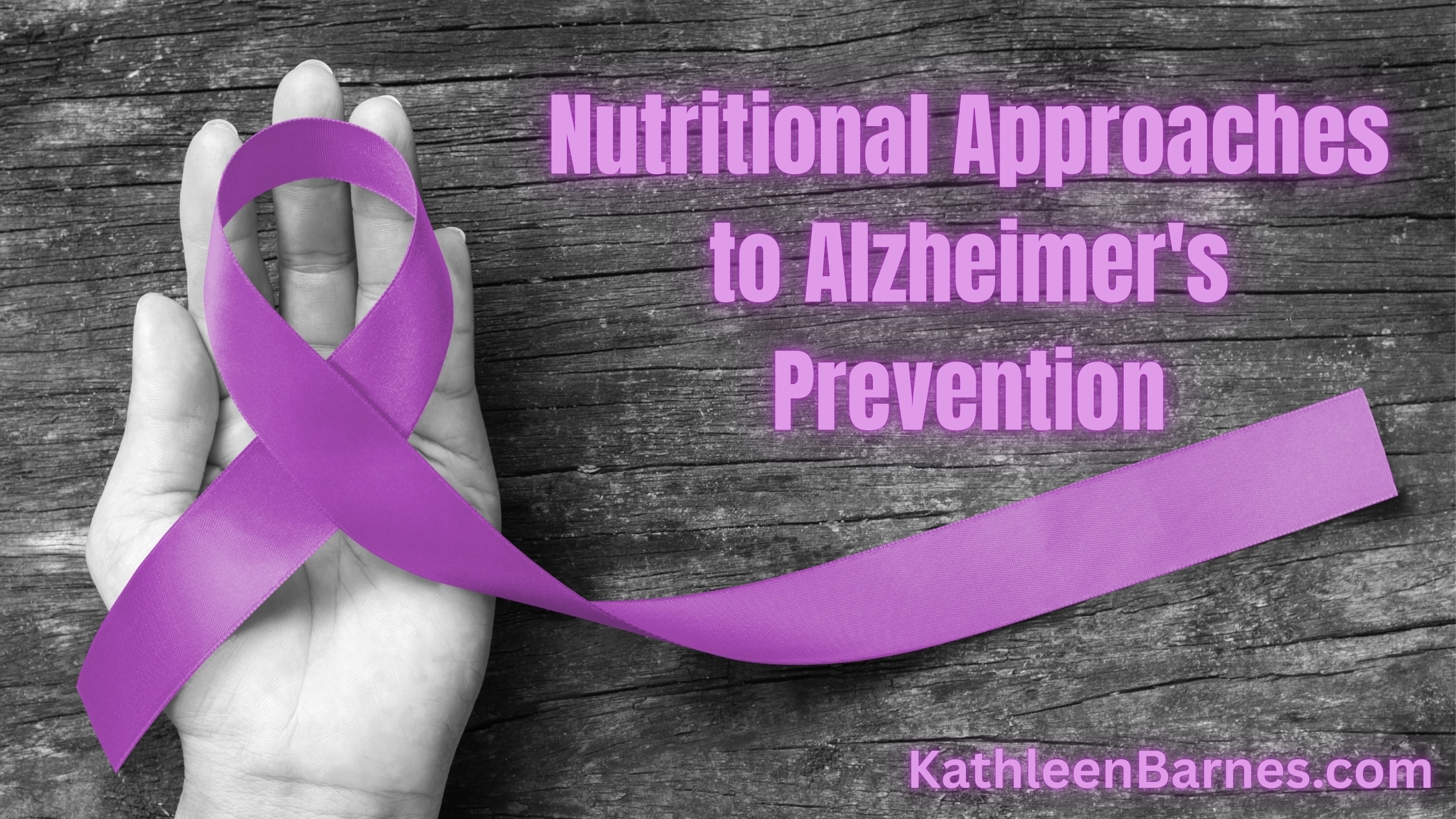
Nutritional Approaches to Alzheimer’s Prevention
Recently, I’ve come across information on three exciting nutritional approaches to Alzheimer’s prevention that I want to share with you:
Curcumin
Increasingly exciting research shows that curcumin made from the rhizome (the tuberous underground portion of the turmeric plant) is a powerful brain protector. University of Florida research h shows it can actually stimulate the brain to produce new cells, something that was once believed impossible.
UCLA research also shows that curcumin destroys the dangerous beta-amyloid protein that forms the plaques and tangles characteristic of Alzheimer’s.
Other research suggests curcumin not only helps generate new neurons, this powerful antioxidant can improve memory in people already diagnosed with Alzheimer’s.
If you’re considering curcumin, take only the BCM-95 ™ formulation, which is easily absorbed. Here’s an excellent book that gives you all the information on curcumin and Alzheimer’s and also documents curcumin’s benefits for a wide variety of other health conditions.
Coconut Oil
While extensive research hasn’t been conducted on coconut oil yet, I see no harm in taking two tablespoons a day when the potential benefits are so great.
A Florida doctor treated her husband, who had been diagnosed with progressing Alzheimer’s, on the theory that again brain cells become starved for glucose, their major “food.”
Dr. Mary Newport, who is a neonatalogist, began to search for alternative “foods” for the brain cells and came across information about medium chain triglycerides from coconut oil that might help those glucose-deprived brain cells survive and even thrive.
The results are documented in this video that shows Mr. Newport’s progression back to normal brain function with 60 days.
Watch it here and make your own choices.
Vitamin D
The miracle of vitamin D is being documented daily. This vitamin is actually a hormone and our best source is through direct exposure of skin to sunlight. It’s also one of my favorites, since it is totally free.
New research published in the May issue of Neurology shows a clear connection between Alzheimer’s and vitamin D levels in the blood.
Two other important studies published in the past six months show links between vitamin D levels and cognitive function in older women and another shows demonstrated that Vitamin D helps clear beta amyloid plaques that develop in the brains of Alzheimer’s patients. This may mean that vitamin D can help reverse Alzheimer’s, but that isn’t clear at this point, since the brain damage itself may not be reversible. It does, though, strongly indicate that vitamin D can prevent that damage.
Lose your sunscreen and get out in the sun!